
Patients who received a Cartiva Synthetic Cartilage Implant may have questions about a recall involving the device, the risks that prompted it, and whether they need additional medical treatment.
Cartiva Inc. initiated the recall on October 31, 2024, and the U.S. Food and Drug Administration posted it on December 4, 2024. The FDA classified the action as a Class II recall. It includes all lots of the four U.S. Cartiva implant sizes distributed from July 2016 through October 2024. As of August 13, 2026, the FDA database listed the recall as open and classified.
The recall does not mean that every Cartiva implant has failed or that every patient needs immediate removal surgery. It does mean that patients should understand the reported complications, monitor their health, and discuss appropriate follow-up with a qualified medical professional.
What Is the Cartiva Synthetic Cartilage Implant?
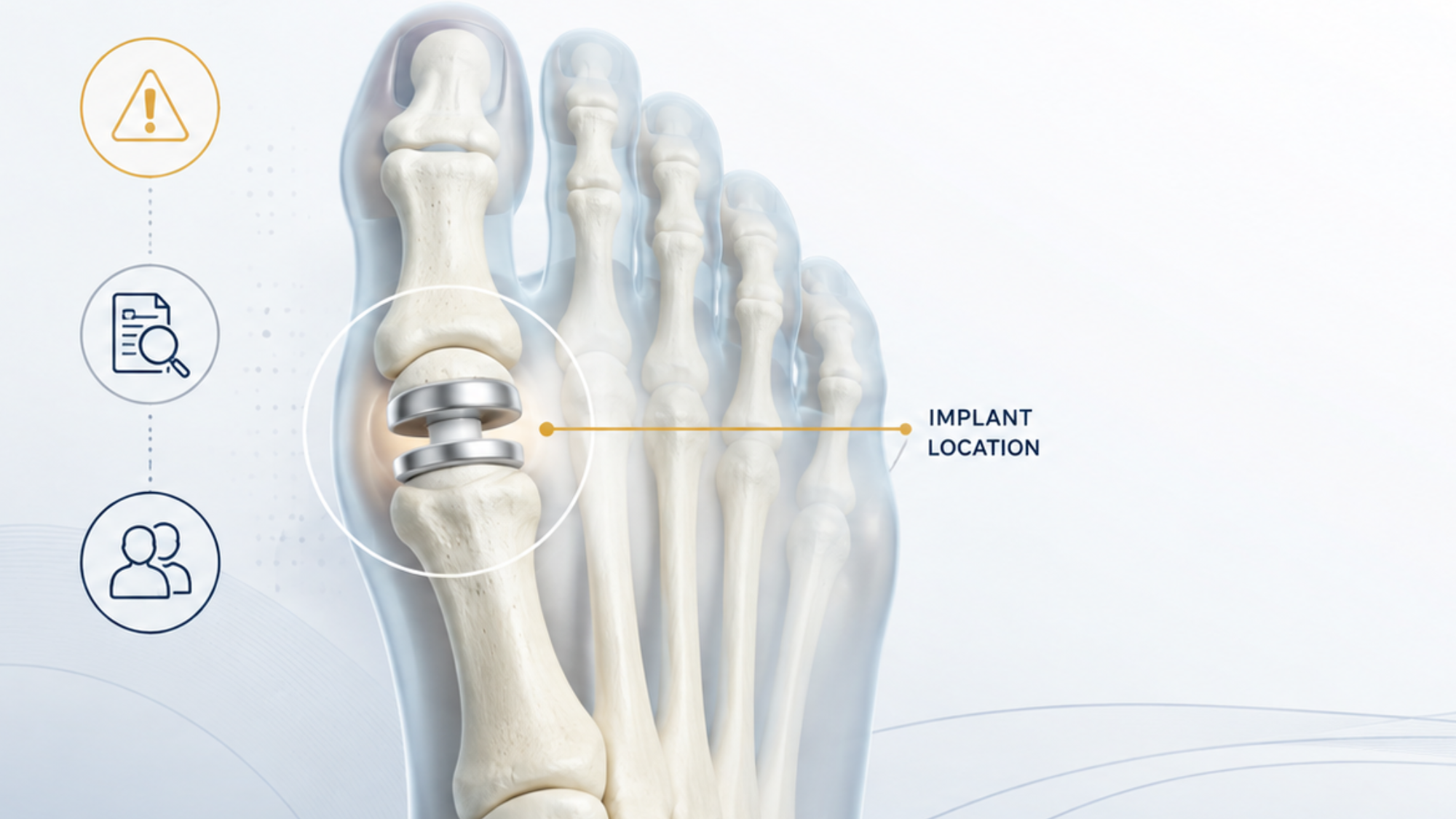
The Cartiva Synthetic Cartilage Implant, commonly called the Cartiva SCI, is a small cylindrical implant used in the joint at the base of the big toe. That joint is known as the first metatarsophalangeal, or MTP, joint.
The FDA approved the device in 2016 to treat painful degenerative or post-traumatic arthritis of the first MTP joint, including hallux limitus and hallux rigidus, with or without mild hallux valgus.
The implant is made from a hydrogel containing polyvinyl alcohol and saline. It was designed to replace a focal area of damaged cartilage, reduce pain, and preserve movement in the big-toe joint. During surgery, the implant is inserted into a prepared opening in the metatarsal head.
Why Was the Cartiva Implant Recalled?
According to the recall notice, postmarket reports and more recently published information indicated that certain complications were occurring more often than expected when compared with the information submitted as part of the device’s 2016 premarket approval.
The documented hazards identified in the recall include:
- Revision surgery
- Implant removal
- Implant subsidence
- Implant displacement
- Pain
- Nerve damage
- Implant fragmentation
Subsidence generally refers to an implant sinking farther into the surrounding bone. Displacement means that the implant has moved from its intended position. Both conditions may affect joint function and can contribute to pain or the need for additional treatment.
The FDA identified the cause of the recall as a device-design issue. The manufacturer’s notice also stated that Cartiva implants had, in some cases, been revised or removed more frequently than had been observed in the original premarket and post-approval studies.
Which Cartiva Implants Are Included?
The U.S. recall covers all lots of the following Cartiva Synthetic Cartilage Implant models distributed between July 2016 and October 2024:
| Implant size | Catalog number |
| 6 millimeters | CAR-06-US |
| 8 millimeters | CAR-08-US |
| 10 millimeters | CAR-10-US |
| 12 millimeters | CAR-12-US |
A patient may not know the implant size or catalog number. This information may appear in the operative report, implant record, hospital chart, product-label sticker, or other records from the original surgery.
What Does a Class II Recall Mean?
The FDA uses three recall classifications to communicate the relative health risk associated with a recalled product.
A Class II recall generally means that exposure to the affected product may cause a temporary or medically reversible health problem, or that the chance of serious health consequences is considered remote. It is a regulatory risk classification and does not predict what will happen to an individual patient.
Patients should not interpret the Class II designation to mean that reported symptoms can be ignored. Ongoing pain, walking difficulties, or changes in joint function may still require medical evaluation.
Does the Recall Mean the Implant Must Be Removed?
Not necessarily.
FDA guidance explains that the recall of an implanted medical device does not automatically mean the device must be removed. In some situations, the risks associated with another operation may be greater than the risks of leaving an implant in place and monitoring it. That decision should be based on the patient’s symptoms, examination findings, medical history, imaging, and available treatment options.
The Cartiva recall notice did not direct healthcare providers to remove every implanted device. Instead, providers were instructed to continue following affected patients and to watch for new or worsening symptoms. Unused Cartiva implants were to be removed from inventory, quarantined, and returned.
Patients should not schedule or delay revision surgery solely because they have learned about the recall. A foot-and-ankle specialist can evaluate whether observation, diagnostic testing, nonsurgical treatment, implant removal, fusion, or another procedure is appropriate.
Symptoms Patients Should Watch For
The manufacturer instructed healthcare providers to monitor patients for new or worsening:
- Big-toe or foot pain
- Difficulty walking
- Skin reactions
- Joint stiffness
- Swelling
- Weakness of the big-toe joint
These symptoms do not prove that a Cartiva implant has failed. They can have multiple causes, including arthritis progression, inflammation, nerve problems, changes in alignment, or other postoperative conditions. However, patients experiencing these symptoms should contact their treating physician rather than attempting to diagnose the problem themselves.
What Should Cartiva Patients Do Now?
1. Confirm which implant you received
Request a copy of your operative report and implant record from the hospital, surgery center, surgeon, or medical-records department. Ask whether the records identify Cartiva SCI, the implant size, catalog number, lot number, and date of implantation.
2. Contact your treating physician
Patients with new or worsening symptoms should arrange an evaluation with the surgeon who performed the procedure or another qualified foot-and-ankle specialist.
Patients without symptoms can contact their provider to confirm whether any change to their normal follow-up schedule is recommended. The recall notice directs providers to continue following Cartiva patients according to appropriate clinical protocols.
3. Ask whether imaging or additional testing is appropriate
Depending on the symptoms and clinical findings, a physician may consider imaging or other testing to evaluate the implant, surrounding bone, joint alignment, and alternative causes of pain. The correct evaluation will depend on the individual patient.
4. Document changes in your condition
Keep a dated record of symptoms, including:
- Where the pain occurs
- Whether the pain is constant or activity-related
- Changes in walking or footwear tolerance
- Swelling, stiffness, weakness, or skin changes
- Work or daily activities affected by the condition
- Medical appointments, testing, and recommended treatment
This information may help the treating physician understand how the condition has changed over time.
5. Preserve your medical and implant records
Keep copies of operative reports, imaging, physician notes, physical-therapy records, billing documents, insurance correspondence, and records from any revision or removal procedure.
Patients who undergo implant removal can also ask their physician or attorney whether the removed device may be preserved, when medically and legally appropriate.
6. Consider reporting an adverse event
Patients, caregivers, and healthcare professionals may voluntarily report medical-device complications or product problems through the FDA’s MedWatch program. The FDA recommends including relevant clinical information and device identifiers when available.
Medical emergencies should be addressed through emergency medical services rather than an adverse-event reporting system.
Questions to Ask Your Doctor
Patients preparing for an appointment may find it helpful to ask:
- Do my records confirm that I received a recalled Cartiva implant?
- Are my symptoms consistent with implant subsidence, displacement, fragmentation, or another condition?
- Would imaging help evaluate the implant and surrounding bone?
- What are the risks and benefits of continued monitoring?
- Under what circumstances would implant removal or revision surgery be considered?
- What treatment options are available if the implant is not functioning as intended?
- How might another procedure affect movement in the big-toe joint?
- How frequently should I be examined?
Writing down the answers can make it easier to compare recommendations or obtain a second opinion.
When a Legal Evaluation May Be Helpful
A patient may consider speaking with an attorney familiar with medical-device cases after experiencing persistent pain, nerve problems, implant removal, revision surgery, additional medical expenses, missed work, or substantial limitations in daily activities.
A recall does not automatically establish that a particular injury was caused by the device, nor does it determine the outcome of an individual legal claim. An attorney can review the medical timeline, implant records, symptoms, treatment history, and other circumstances to explain which options may apply.
Patients considering a legal evaluation should preserve their records and avoid discarding correspondence, implant information, photographs, symptom notes, or documents connected with the original or revision procedures.
The Key Point for Cartiva Patients
The Cartiva implant recall is based on postmarket information indicating higher-than-expected rates of several documented complications. It covers all U.S. Cartiva SCI sizes and all lots distributed from July 2016 through October 2024.
The recall does not mean that every implant must be removed. Patients should confirm which device they received, monitor for new or worsening symptoms, obtain medical advice before making treatment decisions, and keep complete records of their care.
Patients who have experienced significant complications or an additional operation may also choose to obtain a legal evaluation to better understand their individual circumstances.
This article provides general information and is not a substitute for advice from a qualified medical professional regarding an individual patient’s diagnosis or treatment.